Bhutan Tour
Bhutan
Overview
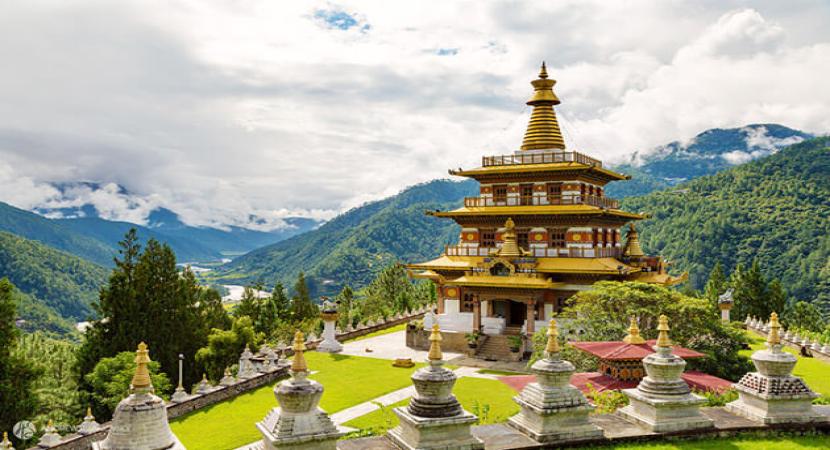
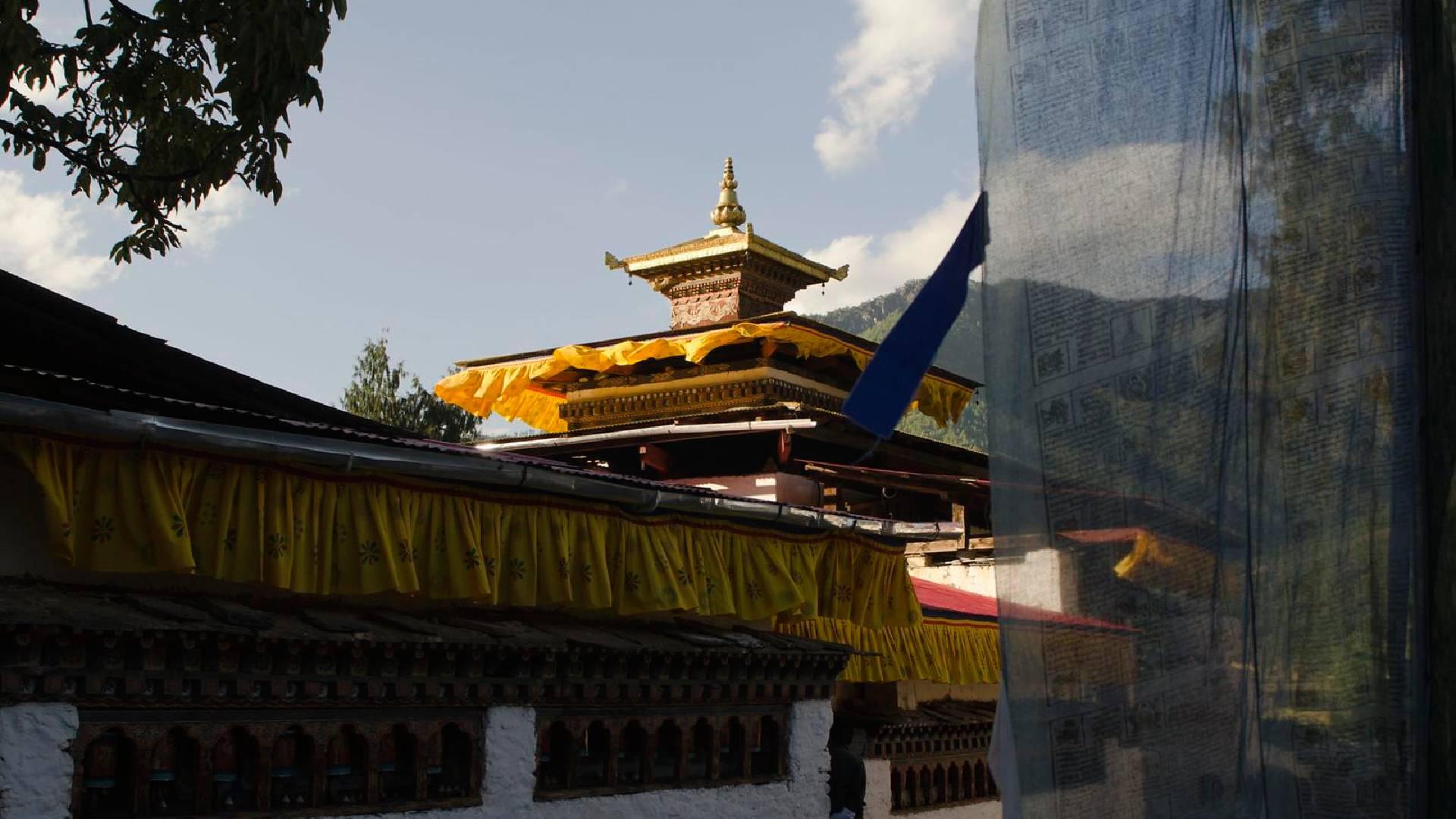
Nestled in the heart of the Eastern Himalayas, Bhutan, often called “The Last Shangri-La,” offers an unparalleled experience where nature, spirituality, and tradition coexist in harmony. This enchanting kingdom captivates with its untouched forests, snow-capped peaks, and deep Buddhist heritage. Committed to the philosophy of Gross National Happiness over material wealth, Bhutan preserves its rich culture, pristine environment, and timeless way of life. From ancient cliffside monasteries to vibrant festivals and serene landscapes dotted with fluttering prayer flags, Bhutan invites mindful travellers to discover its magic.
Day to Day Itinerary
As your flight descends into the Paro Valley, you're greeted by a breathtaking panorama of the Himalayas—jagged peaks rising above the clouds, including legendary mountains such as Everest, Kanchenjunga, and Bhutan’s own sacred summits like Jomolhari and Jichu Drake. This is more than just an arrival; it’s an unforgettable welcome to the Kingdom of Bhutan.
Once you land at Paro International Airport, our local representative will meet you just outside the terminal. After assisting with airport formalities, you’ll begin your scenic drive toward Thimphu, the capital city. The journey takes around one hour, winding through forested mountains and riverside settlements, offering your first glimpses of Bhutanese countryside life.
Upon arrival in Thimphu, check into your hotel and take a moment to unwind. After a short rest, your guided exploration of the capital begins.
Your first stop is the Memorial Chorten, a white stupa crowned with golden spires and spinning prayer wheels. Built in honor of Bhutan’s Third King, it serves as a spiritual hub where locals gather to offer prayers, walk clockwise, and spin the wheels of compassion. The air here is filled with the hum of chanting and the scent of incense—a vivid introduction to Bhutan’s living spiritual traditions.
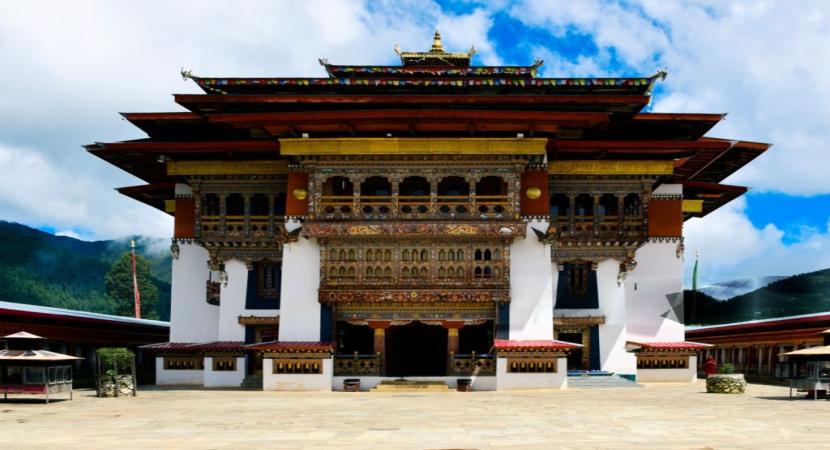
Next, visit the Tashichho Dzong, an imposing fortress-monastery that houses the throne room of the King, government ministries, and the central monastic body. Though originally built centuries ago, the structure was redesigned in the 1960s to reflect modern Bhutanese architecture while preserving traditional elements. The dzong is beautifully illuminated in the evening, creating a serene and majestic ambiance.
Then, head to Choki Traditional Art School, nestled in the quiet Kabesa Valley. Here, students learn time-honored techniques in painting, wood carving, and sculpture—keeping Bhutan’s rich artistic heritage alive for future generations.
Wrap up your day with a visit to the Giant Buddha Dordenma, an immense bronze statue perched on a hilltop overlooking Thimphu. Standing over 50 meters tall, this serene figure radiates peace and wisdom, offering a perfect place to reflect on your first day in this mystical Himalayan kingdom.
Return to your hotel for dinner and rest, as your Bhutanese journey has only just begun.
Meals Included
[-/L/D]
Accommodation
Hotel
Your second day in Bhutan unfolds with a deeper exploration into the kingdom’s enduring heritage of art, literature, and rural life.
Start your morning with a visit to the Institute for Zorig Chusum, widely known as the School of the Thirteen Traditional Arts. This revered institution is dedicated to the preservation and transmission of Bhutan’s traditional crafts, including painting, sculpture, embroidery, woodcarving, and more. You’ll have the chance to observe students diligently practicing age-old techniques—an inspiring window into Bhutan’s artistic soul. (Note: The institute remains closed on Sundays and national holidays.)
Next, step into the spiritual literary world at the National Library, where sacred texts, ancient manuscripts, and religious documents are meticulously preserved. This tranquil archive safeguards some of the oldest Buddhist scriptures written in classical Tibetan script, some printed on traditional handmade paper with ornate wooden cove7rs. (The library is closed on Saturdays, Sundays, and government holidays.)
After soaking in these cultural treasures, enjoy a traditional Bhutanese lunch at a local restaurant in Thimphu, savoring specialties such as ema datshi (chili and cheese), red rice, and homemade buckwheat pancakes.
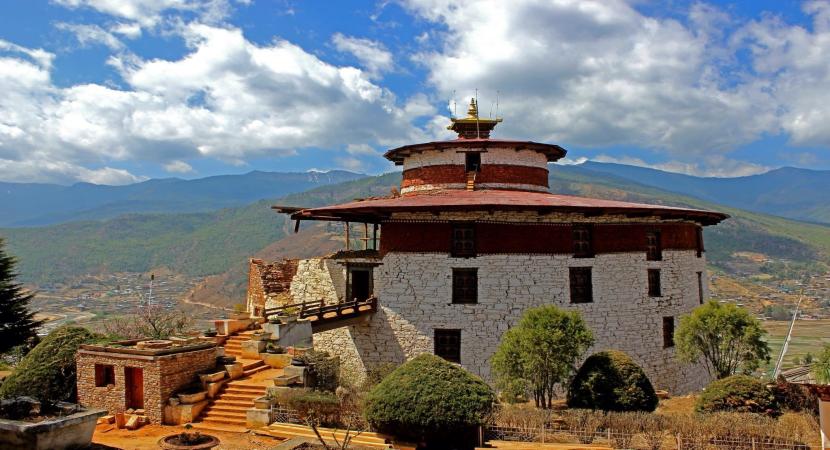
Following lunch, journey back to Paro—a scenic drive of approximately one hour through river valleys and forested hillsides. Upon arrival, head straight to the iconic Ta Dzong, a cylindrical fortress-turned-museum perched above the Paro Dzong. Originally built as a watchtower, it now houses Bhutan’s National Museum. Inside, you’ll find fascinating exhibits of religious thangkas, historical armor, ritual objects, stamps, and an impressive collection of Bhutanese relics that span centuries.
Later in the afternoon, immerse yourself in local culture with a visit to a traditional Bhutanese farmhouse, peacefully set within the lush and fertile valley of Paro. These homes, built without nails using wood and stone, reflect Bhutanese architecture at its most authentic. Surrounded by terraced fields and blooming gardens, the farmhouse offers a warm welcome with a cup of freshly brewed suja (Bhutanese butter tea) or herbal tea. Engage in friendly conversation with your local host and gain insight into rural Bhutanese life—marked by simplicity, self-sufficiency, and deep-rooted traditions.
As the day draws to a close, take a moment to reflect on the richness of Bhutanese culture—from the spiritual to the artistic, from the capital’s vibrant energy to the quiet charm of Paro’s countryside.
Meals Included
B/L/D
Accommodation
Hotel
Begin your day with an unforgettable journey to one of Bhutan’s most revered landmarks—the Taktsang Monastery, famously known as the Tiger’s Nest. Perched dramatically on a cliffside at an altitude of around 3,000 meters, this sacred monastery holds immense spiritual significance in Bhutanese Buddhism.
As the legend goes, Guru Rinpoche, the spiritual master who brought Buddhism to Bhutan, is believed to have arrived at this sacred site riding a tigress, where he meditated in a cave that now forms part of the temple complex. The setting is nothing short of spectacular, with the monastery clinging to sheer rock faces and offering sweeping views of the surrounding forested valley.
The hike to Taktsang is both scenic and physically demanding. Winding trails lead through pine forests adorned with prayer flags, and occasional viewpoints offer breathtaking glimpses of the monastery across the ravine. While the climb requires stamina, the spiritual atmosphere and natural beauty make every step worthwhile.
Despite suffering a devastating fire in 1998, the monastery has since been meticulously restored, preserving its intricate architecture and sacred murals. Upon reaching the top, you'll have the opportunity to explore its inner sanctums and offer butter lamps—a powerful spiritual act believed to illuminate the mind and clear away ignorance and negativity.
In the evening, unwind with a traditional Bhutanese hot stone bath at a local farmhouse. Smooth river stones, heated over an open fire, are placed in herbal-infused water, releasing soothing minerals believed to ease muscle aches and promote overall wellness. This age-old practice, often accompanied by a gentle massage, offers the perfect end to a day filled with physical challenge and spiritual discovery.
Meals Included
B/L/D
Accommodation
Hotel
Enjoy an early morning breakfast at the hotel before we escort you to the airport for your onward journey.
Meals Included
B
Terms & Condition
A deposit amounting to 30% of the total invoice value must be paid at the time of booking in order to secure and confirm all arrangements.
The remaining balance (70%) must be paid no later than 50 days prior to the arrival date of the guests.
Any changes to the booking after confirmation may incur additional charges and will be subject to availability.
Cancellation Policy
Cancellation made within 50 days of the arrival date: 50% of the total invoice amount will be charged.
Cancellation made within 40 days of the arrival date or later: 100% of the total invoice amount will be charged.
No refunds will be provided for no-shows or unused services after the commencement of the tour.

Bhutan Tour
Tour Itinerary
Arrival in Paro and Transfer to Thimphu (1hr/54kms)
As your flight descends into the Paro Valley, you're greeted by a breathtaking panorama of the Himalayas—jagged peaks rising above the clouds, including legendary mountains such as Everest, Kanchenjunga, and Bhutan’s own sacred summits like Jomolhari and Jichu Drake. This is more than just an arrival; it’s an unforgettable welcome to the Kingdom of Bhutan.
Once you land at Paro International Airport, our local representative will meet you just outside the terminal. After assisting with airport formalities, you’ll begin your scenic drive toward Thimphu, the capital city. The journey takes around one hour, winding through forested mountains and riverside settlements, offering your first glimpses of Bhutanese countryside life.
Upon arrival in Thimphu, check into your hotel and take a moment to unwind. After a short rest, your guided exploration of the capital begins.
Your first stop is the Memorial Chorten, a white stupa crowned with golden spires and spinning prayer wheels. Built in honor of Bhutan’s Third King, it serves as a spiritual hub where locals gather to offer prayers, walk clockwise, and spin the wheels of compassion. The air here is filled with the hum of chanting and the scent of incense—a vivid introduction to Bhutan’s living spiritual traditions.
Next, visit the Tashichho Dzong, an imposing fortress-monastery that houses the throne room of the King, government ministries, and the central monastic body. Though originally built centuries ago, the structure was redesigned in the 1960s to reflect modern Bhutanese architecture while preserving traditional elements. The dzong is beautifully illuminated in the evening, creating a serene and majestic ambiance.
Then, head to Choki Traditional Art School, nestled in the quiet Kabesa Valley. Here, students learn time-honored techniques in painting, wood carving, and sculpture—keeping Bhutan’s rich artistic heritage alive for future generations.
Wrap up your day with a visit to the Giant Buddha Dordenma, an immense bronze statue perched on a hilltop overlooking Thimphu. Standing over 50 meters tall, this serene figure radiates peace and wisdom, offering a perfect place to reflect on your first day in this mystical Himalayan kingdom.
Return to your hotel for dinner and rest, as your Bhutanese journey has only just begun.
Exploring Thimphu and Returning to Paro
Your second day in Bhutan unfolds with a deeper exploration into the kingdom’s enduring heritage of art, literature, and rural life.
Start your morning with a visit to the Institute for Zorig Chusum, widely known as the School of the Thirteen Traditional Arts. This revered institution is dedicated to the preservation and transmission of Bhutan’s traditional crafts, including painting, sculpture, embroidery, woodcarving, and more. You’ll have the chance to observe students diligently practicing age-old techniques—an inspiring window into Bhutan’s artistic soul. (Note: The institute remains closed on Sundays and national holidays.)
Next, step into the spiritual literary world at the National Library, where sacred texts, ancient manuscripts, and religious documents are meticulously preserved. This tranquil archive safeguards some of the oldest Buddhist scriptures written in classical Tibetan script, some printed on traditional handmade paper with ornate wooden cove7rs. (The library is closed on Saturdays, Sundays, and government holidays.)
After soaking in these cultural treasures, enjoy a traditional Bhutanese lunch at a local restaurant in Thimphu, savoring specialties such as ema datshi (chili and cheese), red rice, and homemade buckwheat pancakes.
Following lunch, journey back to Paro—a scenic drive of approximately one hour through river valleys and forested hillsides. Upon arrival, head straight to the iconic Ta Dzong, a cylindrical fortress-turned-museum perched above the Paro Dzong. Originally built as a watchtower, it now houses Bhutan’s National Museum. Inside, you’ll find fascinating exhibits of religious thangkas, historical armor, ritual objects, stamps, and an impressive collection of Bhutanese relics that span centuries.
Later in the afternoon, immerse yourself in local culture with a visit to a traditional Bhutanese farmhouse, peacefully set within the lush and fertile valley of Paro. These homes, built without nails using wood and stone, reflect Bhutanese architecture at its most authentic. Surrounded by terraced fields and blooming gardens, the farmhouse offers a warm welcome with a cup of freshly brewed suja (Bhutanese butter tea) or herbal tea. Engage in friendly conversation with your local host and gain insight into rural Bhutanese life—marked by simplicity, self-sufficiency, and deep-rooted traditions.
As the day draws to a close, take a moment to reflect on the richness of Bhutanese culture—from the spiritual to the artistic, from the capital’s vibrant energy to the quiet charm of Paro’s countryside.
Taktsang Hike
Begin your day with an unforgettable journey to one of Bhutan’s most revered landmarks—the Taktsang Monastery, famously known as the Tiger’s Nest. Perched dramatically on a cliffside at an altitude of around 3,000 meters, this sacred monastery holds immense spiritual significance in Bhutanese Buddhism.
As the legend goes, Guru Rinpoche, the spiritual master who brought Buddhism to Bhutan, is believed to have arrived at this sacred site riding a tigress, where he meditated in a cave that now forms part of the temple complex. The setting is nothing short of spectacular, with the monastery clinging to sheer rock faces and offering sweeping views of the surrounding forested valley.
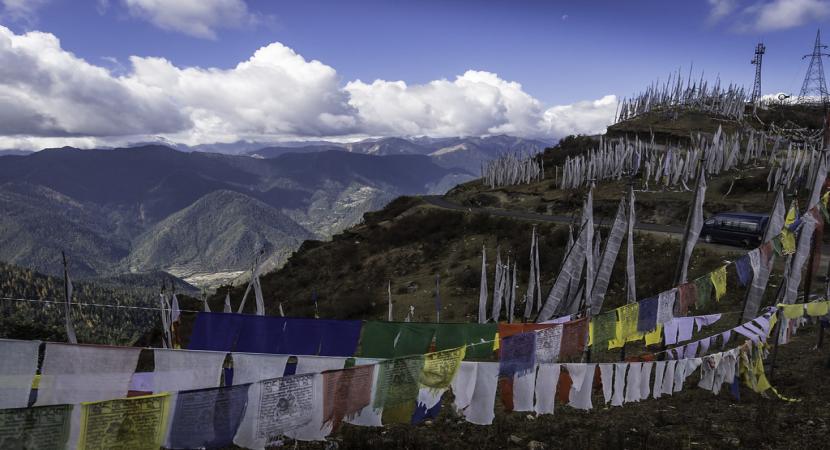
The hike to Taktsang is both scenic and physically demanding. Winding trails lead through pine forests adorned with prayer flags, and occasional viewpoints offer breathtaking glimpses of the monastery across the ravine. While the climb requires stamina, the spiritual atmosphere and natural beauty make every step worthwhile.
Despite suffering a devastating fire in 1998, the monastery has since been meticulously restored, preserving its intricate architecture and sacred murals. Upon reaching the top, you'll have the opportunity to explore its inner sanctums and offer butter lamps—a powerful spiritual act believed to illuminate the mind and clear away ignorance and negativity.
In the evening, unwind with a traditional Bhutanese hot stone bath at a local farmhouse. Smooth river stones, heated over an open fire, are placed in herbal-infused water, releasing soothing minerals believed to ease muscle aches and promote overall wellness. This age-old practice, often accompanied by a gentle massage, offers the perfect end to a day filled with physical challenge and spiritual discovery.
Depart Paro
Enjoy an early morning breakfast at the hotel before we escort you to the airport for your onward journey.
Frequently Asked Questions
1. What is the itinerary for a 3Nights 4Days Bhutan Tour?
2. What are the main highlights of the tour?
3. What type of accommodation is provided during the trip?
4. What meals are included in the tour package?
5. What is the best time of year to embark on this Himalayan journey?
6. What kind of transportation is provided during the tour?
7. What level of physical fitness is required for the trip?
8. Are there any altitude considerations or concerns during the journey?
Include & Exclude
- Arrival and departure transfer
- All necessary surface transportation by private vehicle throughout the tour
- 1 Night hotel accommodation in Thimphu on a twin-sharing basis with full board
- 2 Nights hotel accommodation in Paro on a twin-sharing basis with full board
- All sightseeing tours and excursions as per the itinerary with an experienced English-speaking guide
- Private vehicle for all transfers and sightseeing as mentioned
- Bhutan Visa Fee
- Bhutan e-Permit
- Sustainable Development Fund (SDF)
- Entrance fees to monuments and sites as per the itinerary
- International airfare
- International airport taxes
- Personal expenses
- Additional transport or mileage beyond the standard itinerary
- Comprehensive travel insurance
- Charges for excess baggage
- Costs arising from unforeseen circumstances
Things To Know
Visa Required: All international travelers (except Indian, Bangladeshi, and Maldivian nationals) must obtain a visa in advance through a registered Bhutanese tour operator.
Daily Sustainable Development Fee (SDF): Bhutan charges a daily fee to international visitors, which contributes to environmental and cultural preservation.
Guided Tours: Independent travel is not permitted; all tourists must be accompanied by a licensed guide.
Currency: The official currency is the Ngultrum (BTN), and Indian Rupees (INR) are also widely accepted.
Internet & Connectivity: Wi-Fi is available in most hotels and cafes, but the connection may be slower in remote areas.
Electricity: Power sockets are typically 230V with Type D, F, or G plugs. Carry a universal adapter.
Weather Varies by Altitude: Pack accordingly—layers are best.
Things To Carry
- Comfortable walking/hiking shoes
- Layered clothing for varying temperatures
- Travel insurance documents
- Mobile phone, charger & universal adapter