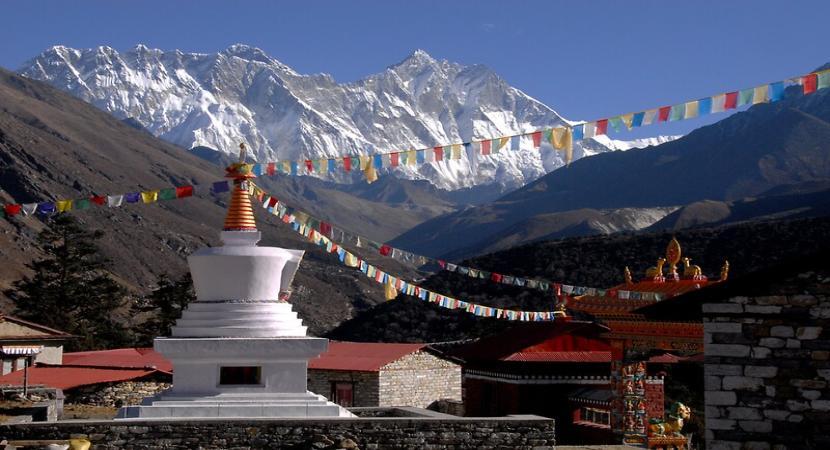
Everest Base Camp Trek 13 Nights 14 Days
Nepal
Overview
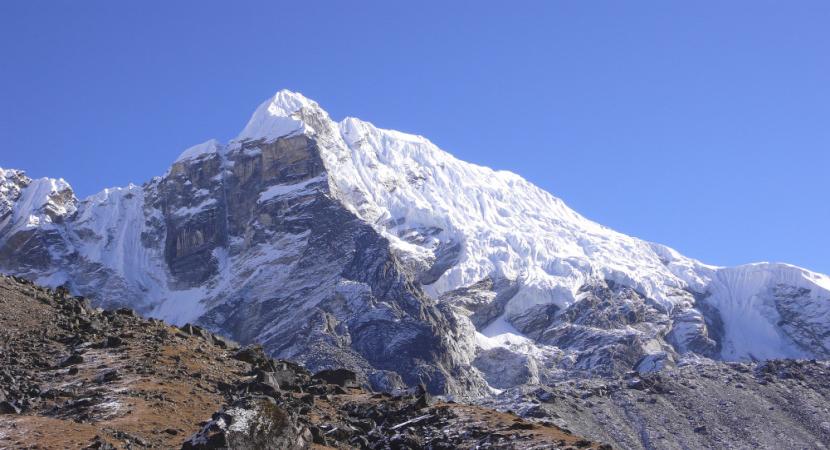
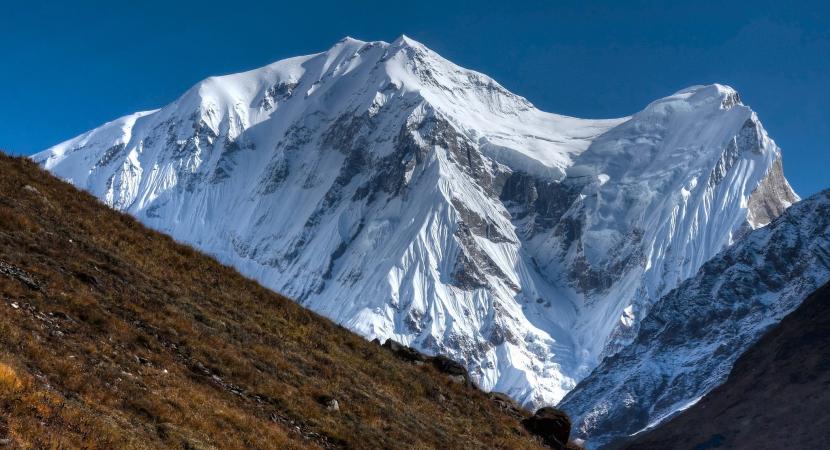
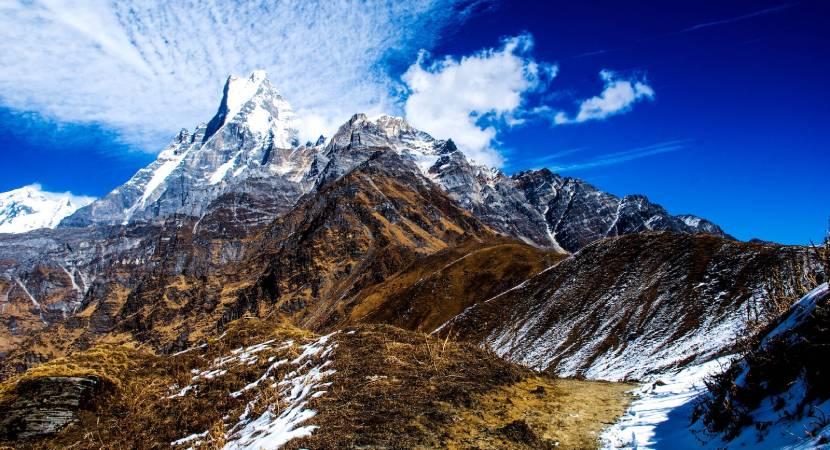
The Everest Base Camp Trek is a legendary journey to the foothills of the world’s highest mountain, Mount Everest (8,848 m). This trek offers breathtaking views of towering Himalayan peaks, vibrant Sherpa villages, and centuries-old monasteries. Beginning with a scenic flight to Lukla, the trail leads through Namche Bazaar, Tengboche, and Gorakshep before reaching the iconic Everest Base Camp (5,364 m). Trekkers also hike to Kala Patthar (5,545 m) for the best panoramic sunrise views of Everest and surrounding giants. Blending adventure, culture, and stunning natural beauty, it’s truly a once-in-a-lifetime experience in the heart of the Himalayas.
Day to Day Itinerary
Upon arriving at Tribhuvan International Airport, you will be warmly greeted by our representative, who will assist you with your luggage and guide you through the arrival process. From there, you’ll be transferred to your pre-booked hotel, ensuring a smooth and comfortable start to your journey in Nepal.
Meals Included
-/-/-
Accommodation
Hotel
Early morning after breakfast you will be transferred from the hotel to the domestic airport, a short drive of 10-15 minutes, and board a small twin-otter or similar type of aircraft for the sweeping panoramic flight to Lukla and trek to Pakding which will take about 3-4 hours. The walk is along a pleasant trail most of the way, with a few steep climbs from Tarhe Khola, where you have a superb view of the Kusum-Kangru (6,369m) crossing. Then after a short climb, you reach Ghat village, and another 1½ hours of trekking brings you to Phakding village for the overnight stop near the bank of the Dudh-Kosi River.
Meals Included
B/-/
Accommodation
Simple Lodge
Today, we will walk approx. 6/7hrs. From Phakding after crossing the suspension bridge over the Dudh-Kosi River, the walk is pleasant with a few short uphill climbs and then downhill, re-crossing the same river again, with magnificent views of Thamserku (6,608m). From the village of Benkar, you will cross the long suspension bridge over the Bhote-Koshi River once more, and then continue on this busy trail of trekkers, Ghopkyo, and porters, before finally arriving at the small village of Monjo-where you can see an interesting water mill grinding roasted corns and barley for Tsampa, one of the staple foods of the Sherpas, Tibetans, and other mountain people. Monjo is situated below the magnificent peak of Thamserku and near the entrance of Sagarmatha National Park. After a few minutes walk from Monjo, you will reach the entrance of Sagarmatha National Park, where your trekking permit and especially the parking ticket are checked to keep a record of all trekkers going in and out including the local trekking staff.
From here there is a short descent to Jorsalle village, the last village and the only place to shop before Namche Bazaar. You will continue to trek by the river until the last bridge over the Imjatse River is reached. From here the walk is along a winding uphill path to Namche Bazaar, with views of Kwangde Peak and its other sister peaks to the east, with Kusum Kangru behind you as you climb higher. There are also views of Mt. Everest and Mt. Nuptse, Mt. Lhotse, and a closer view of Taweche Peak, which can be seen up to Thop Danda, where there’s a resting stone wall for the porters and trekkers. There is still another 1-2 hour walk, which brings you to the famed Namche Bazaar, with its colourful houses situated in an amphitheatre U-shaped bowl.
Meals Included
B/-/
Accommodation
Simple Lodge
Suggested activities include a short walk uphill to the Sagarmatha National Park headquarters, a magnificent spot perched on top of Namche Bazaar with spectacular views of the surrounding snow-capped giants and the valleys way down below. There is also an interesting museum with all kinds of information regarding the history of the Himalayas, its geography, culture, mountaineering history, and information on the flora and fauna of this region. You can then enjoy the afternoon at leisure.
Meals Included
B/-/
Accommodation
Simple Lodge
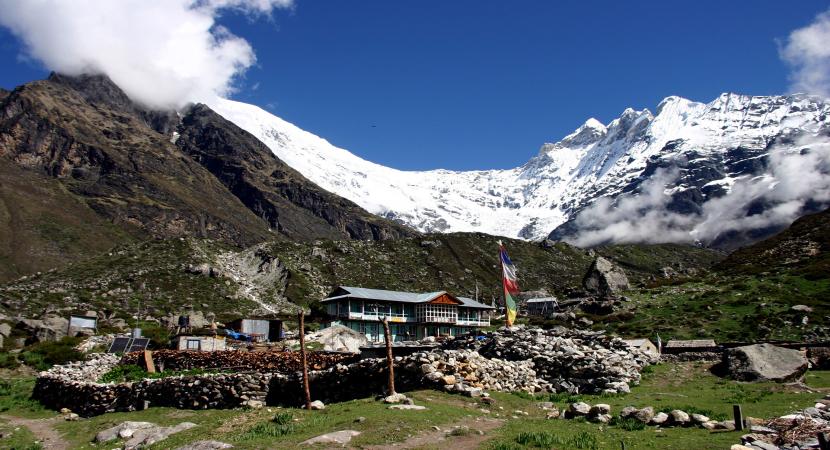
Approx walking time: 5hrs. The trail leads along a winding path with great views of Mt. Everest, Nuptse, Lhotse, Ama Dablam, and a close-up view of Thamserku. You will come to a busy place called Sagnasa, and in this area, there is a much higher chance of seeing the beautifully coloured Danphe pheasant (Impeyan Pheasant) the national bird of Nepal, and the elusive musk deer, and sometimes even a herd of Himalayan Thar (mountain goat). From Sagnasa, the trail descends to the Imjatse River at Phungitenga (3250m), a small settlement with a couple of teahouses and a small Royal Nepalese Army barracks amid the alpine woods of mostly silver fir blue pines, rhododendron, and some magnolia and birch trees. At Phungitenga there's an interesting prayer wheel propelled by water, from the nearby streams. The walk from here is strenuous for an hour on a winding trail through shaded woods until a small religious monument of prayer stones covered with rhododendron leaves and junipers is reached. From here the walk is uphill for another hour, with views of Thamserku and Kangtenga (which from this angle looks more like an icy Sphinx or a big cat). As you reach Tengboche, you will be assured by a religious Buddhist gate that the walk for the day is almost over. Tengboche is one of the most beautiful places in the Himalayas, and the first thing that you will see is a big Ghompa (monastery), before a large field with campsites and teahouses, lodges beneath the peak of Ama Dablam with Everest looming above, and the Nuptse wall to the North with Mt. Lhotse and Lhotse Shar to the North East and many more peaks all around you.
Meals Included
B/-/
Accommodation
Simple Lodge
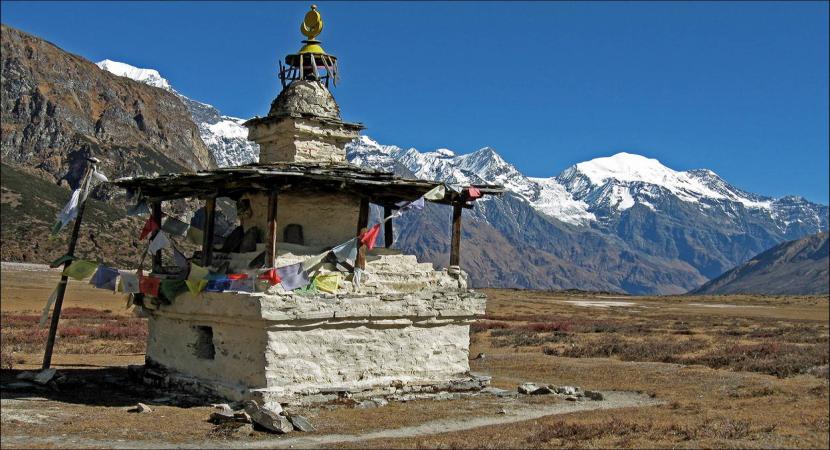
Trekking time: 5-6hrs. The trail descends through a forest of birch, fir, juniper, and rhododendron and comes out at a lovely spot at Deboche (3,650m) with further views of Mt. Ama Dablam, Mt.Everest, Nuptse, and Lhotse. From Deboche you will walk past the long prayer mani wall, the path is gradual until you reach a small bridge over the narrow gorge of the Imja-Tse River. The walk continues gradually uphill most of the way, as you come to a large mani wall gate. A little further from here the route diverts two ways; the upper one goes to the upper Pangboche village, where the old Monastery is located, and the lower route is the straightforward main trail to Dingboche, Pheriche, and beyond. It will be better to go on the upper trail, for the views and to visit the upper Pangboche village 3,900m, and its Monastery which had a Yeti scalp and a skeleton believed to be a Yeti's hand, it was stolen in the early ‘90s, and has never been recovered. After a visit to the Monastery, there is a gradual walk downhill which brings you back to the main trail, from here Kantenga peak looks different from its northern face. After a pleasant break here your journey continues eastwards, after an hour’s walk, before a small wooden bridge the road splits two ways again; the north going to Pheriche and the second leading east beneath the towering north face of Ama Dablam. The trails climb slowly, winding above the Imjatse River, until you come to a big mani Stupa. From here onwards the walk is fairly moderate as you enter the Imjatse Valley beneath the mighty peaks of Ama Dablam, Nuptse, and Lhotse with views of the eastern snow-capped mountains including the Island Peak or Imjatse (6,189m), which is a popular trekking peak in Nepal. Dingboche is a beautiful patchwork of fields enclosed by stone walls protecting the crops of barley, buckwheat, and potatoes from the cold winds and grazing animals.
Meals Included
B/-/
Accommodation
Simple Lodge
Approx trekking time: 06 hrs. Our onward journey leads north, and the path heads up for about 40-50mins until you come to a mani-prayer stupa. The trail is gentle looking down to Pheriche village below. Today's walk offers views of Mt.Tawache, Ama Dablam, and the north-Pokalde (5,741m), Kongma-Tse (5,820m), and the great wall of Nuptse. After a walk of 1 ½ to 2 hours, the trail from Pheriche joins near Dugla (4595m) before a small wooden bridge over the river of Khumbu glacier. You will stop at Dugla, for lunch, before continuing for an hour up a steep hill to the top, where there are views of Mt. Pumori and other peaks west of Everest. This is a good spot for a short break. There is another 1 ½ to 2 hours of trekking up to Loboche, hidden and sheltered from the wind.
Meals Included
B/-/
Accommodation
Simple Lodge
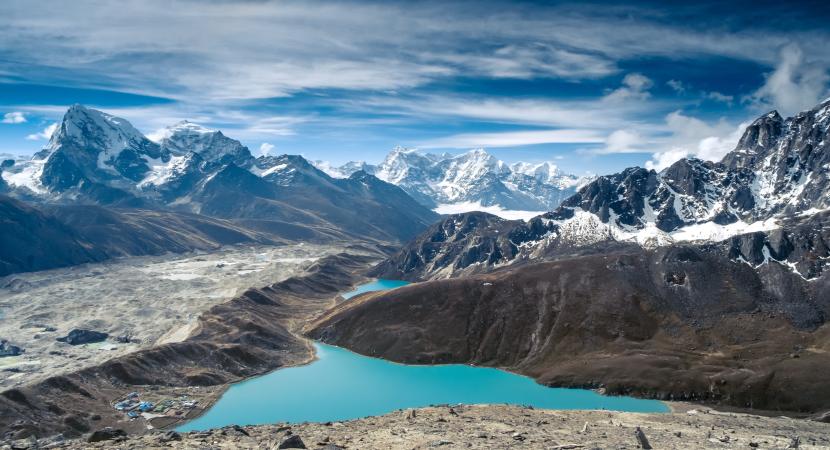
Approx trekking time: 06-07 hrs. After an early breakfast, you will prepare for your final destination at the foot of Everest Base Camp. You will trek up the valley following the rocky moraine path. You can see the icy glacial pond and icebergs down below of Khumbu glacier. After the last rocky moraine dunes, a short downhill walk brings you to Gorakshep on the flat field below Kalapatthar (5545m) and Mt.Pumori (7,145m). Gorakshep is the location of the original Everest Base Camp.
Meals Included
B/-/
Accommodation
Simple Lodge
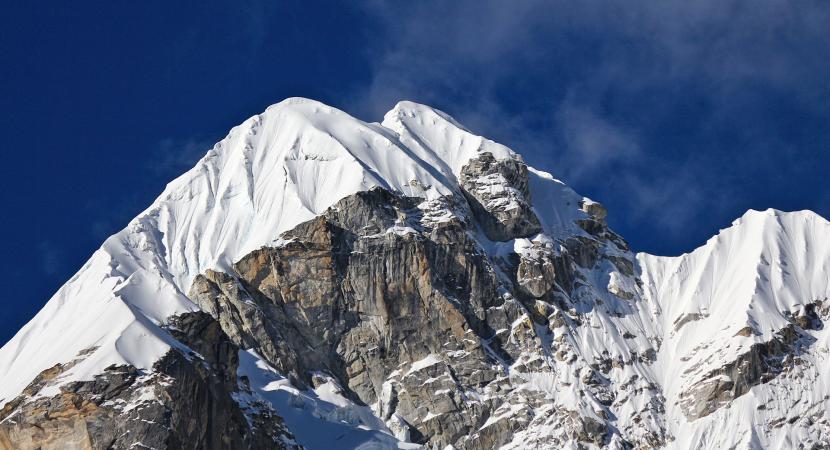
Another 1.5/2.5 hours walk to Kalapatthar from Gorakshep, with refreshment, continues towards Kalapatthar. The walk is gradual till you reach the rocky spot after an hour’s walk. From here another uphill climb for ½ hour brings you to Kalapatthar, 5,288m. From Kalapatthar Top, the views will be beyond your wildest imagination, with Everest seeming within a stone’s throw distance between the summit of Mt. Nuptse and Lho-La and Lhotse on the back. The panoramic view from this spot is something to cherish and you feel it's worth the hard climb up to here and to feel at the top of the world. With all the higher snow-capped giants that dominate all around, it is truly a magnificent spot to be on a clearer sunny day. After a great moment, an hour’s descent takes you back to Gorakshep and then back to Pheriche for the night.
Meals Included
B/-/
Accommodation
Simple Lodge
Begin trekking from Pheriche, descending towards Dingboche and following the trail along the Imja Khola river. Continue the ascent towards Namche Bazaar. The trail gets steeper as you approach the town. The trek will be of 6 to 7 hours. Arrival in Namche stay at the lodge.
Meals Included
B/-/
Accommodation
Simple Lodge
Start your trek early from Namche Bazaar, descending through Monjo and Jorsale villages. The trail follows the Dudh Kosi River and offers beautiful views of the mountains. Continue descending through Benkar and Phakding. The path gets easier as you approach Lukla.
Meals Included
B/-/
Accommodation
Simple Lodge
The thunder of propellers jolts us awake at dawn, and Lukla’s infamous weather demands an early departure. As our Twin Otter leaps off the tilted runway, Everest's silhouette waves farewell through morning clouds. The 35-minute flight treats us to a final aerial show: terraced hillsides giving way to Kathmandu's urban sprawl.
By mid-morning, we're sipping fresh juice at our hotel, where hot showers and cotton sheets feel like luxuries. The afternoon unfolds slowly, sorting photos that barely capture the mountains' grandeur, repacking souvenirs (a singing bowl, prayer flags), and perhaps a massage for trail-weary muscles. As evening falls over the bustling city, we'll gather for a farewell dinner, our conversation still drifting back to icy passes and Sherpa hospitality. The Himalayas may fade from view, but their imprint on us remains as permanent as the snow on Everest's crown.
Meals Included
B/-/
Accommodation
Hotel
Today’s itinerary showcases Kathmandu’s spiritual and historical gems, the revered Pashupatinath, the serene Boudhanath, and Bhaktapur’s UNESCO-listed Durbar Square, offering a glimpse into Nepal’s rich heritage.
Pashupatinath - Where Life and Eternity Meet: The Bagmati's holy waters mirror centuries of prayers as Pashupatinath's golden spires hum with devotion to Shiva, where smoke from pyres carries souls and saffron-clad priests chant ancient mantras. The air carries both the scent of incense and the solemnity of cremation rituals, offering a raw glimpse into Nepal's cycle of life and death. Priests chant, saffron-robed sadhus meditate, and the faithful gather in this sacred crossroads of mortality and faith.
Boudhanath- A Mandala of Peace: The great white stupa of Boudhanath rises like a celestial mountain, its golden spire piercing the sky. Pilgrims circle clockwise, spinning prayer wheels as fluttering mantras dissolve into the wind. In surrounding monasteries, the rhythmic drone of monks chanting blends with the clatter of teacups, creating a living tapestry of Tibetan Buddhism.
Bhaktapur - A Stone Chronicle of Kings: Time crystallizes in Bhaktapur's Durbar Square, where the 55-Window Palace's carved deities still watch over the city. The Nyatapola Temple's five-tiered majesty - each level guarded by stone strongmen - has withstood centuries, while the Vatsala Temple's legendary bell keeps barking at the heels of history. Every brick here whispers Newari glory.
Meals Included
B/-/
Accommodation
Hotel
Your final Kathmandu morning includes breakfast and a smooth airport transfer. As the prayer wheels spin for your safe journey, we plant the seed for your next Nepal adventure.
Meals Included
B
Terms & Condition
Cancellation Policy

Everest Base Camp Trek 13 Nights 14 Days
Trekking Itinerary
Arrival in Kathmandu
Upon arriving at Tribhuvan International Airport, you will be warmly greeted by our representative, who will assist you with your luggage and guide you through the arrival process. From there, you’ll be transferred to your pre-booked hotel, ensuring a smooth and comfortable start to your journey in Nepal.
Fly to Lukla/ trek to Phakding (2652m/ 8701 ft)) approx. 03 trek
Early morning after breakfast you will be transferred from the hotel to the domestic airport, a short drive of 10-15 minutes, and board a small twin-otter or similar type of aircraft for the sweeping panoramic flight to Lukla and trek to Pakding which will take about 3-4 hours. The walk is along a pleasant trail most of the way, with a few steep climbs from Tarhe Khola, where you have a superb view of the Kusum-Kangru (6,369m) crossing. Then after a short climb, you reach Ghat village, and another 1½ hours of trekking brings you to Phakding village for the overnight stop near the bank of the Dudh-Kosi River.
Trek to Namche Bazaar (3,440m/ 11286 ft) 06-07 hours trek
Today, we will walk approx. 6/7hrs. From Phakding after crossing the suspension bridge over the Dudh-Kosi River, the walk is pleasant with a few short uphill climbs and then downhill, re-crossing the same river again, with magnificent views of Thamserku (6,608m). From the village of Benkar, you will cross the long suspension bridge over the Bhote-Koshi River once more, and then continue on this busy trail of trekkers, Ghopkyo, and porters, before finally arriving at the small village of Monjo-where you can see an interesting water mill grinding roasted corns and barley for Tsampa, one of the staple foods of the Sherpas, Tibetans, and other mountain people. Monjo is situated below the magnificent peak of Thamserku and near the entrance of Sagarmatha National Park. After a few minutes walk from Monjo, you will reach the entrance of Sagarmatha National Park, where your trekking permit and especially the parking ticket are checked to keep a record of all trekkers going in and out including the local trekking staff.
From here there is a short descent to Jorsalle village, the last village and the only place to shop before Namche Bazaar. You will continue to trek by the river until the last bridge over the Imjatse River is reached. From here the walk is along a winding uphill path to Namche Bazaar, with views of Kwangde Peak and its other sister peaks to the east, with Kusum Kangru behind you as you climb higher. There are also views of Mt. Everest and Mt. Nuptse, Mt. Lhotse, and a closer view of Taweche Peak, which can be seen up to Thop Danda, where there’s a resting stone wall for the porters and trekkers. There is still another 1-2 hour walk, which brings you to the famed Namche Bazaar, with its colourful houses situated in an amphitheatre U-shaped bowl.
Rest day at Namche Bazaar
Suggested activities include a short walk uphill to the Sagarmatha National Park headquarters, a magnificent spot perched on top of Namche Bazaar with spectacular views of the surrounding snow-capped giants and the valleys way down below. There is also an interesting museum with all kinds of information regarding the history of the Himalayas, its geography, culture, mountaineering history, and information on the flora and fauna of this region. You can then enjoy the afternoon at leisure.
Trek to Tengboche (3,867m/ 12687 ft) 05 hours trek
Approx walking time: 5hrs. The trail leads along a winding path with great views of Mt. Everest, Nuptse, Lhotse, Ama Dablam, and a close-up view of Thamserku. You will come to a busy place called Sagnasa, and in this area, there is a much higher chance of seeing the beautifully coloured Danphe pheasant (Impeyan Pheasant) the national bird of Nepal, and the elusive musk deer, and sometimes even a herd of Himalayan Thar (mountain goat). From Sagnasa, the trail descends to the Imjatse River at Phungitenga (3250m), a small settlement with a couple of teahouses and a small Royal Nepalese Army barracks amid the alpine woods of mostly silver fir blue pines, rhododendron, and some magnolia and birch trees. At Phungitenga there's an interesting prayer wheel propelled by water, from the nearby streams. The walk from here is strenuous for an hour on a winding trail through shaded woods until a small religious monument of prayer stones covered with rhododendron leaves and junipers is reached. From here the walk is uphill for another hour, with views of Thamserku and Kangtenga (which from this angle looks more like an icy Sphinx or a big cat). As you reach Tengboche, you will be assured by a religious Buddhist gate that the walk for the day is almost over. Tengboche is one of the most beautiful places in the Himalayas, and the first thing that you will see is a big Ghompa (monastery), before a large field with campsites and teahouses, lodges beneath the peak of Ama Dablam with Everest looming above, and the Nuptse wall to the North with Mt. Lhotse and Lhotse Shar to the North East and many more peaks all around you.
Trek to Dingboche (4,358m/ 14298 ft) 05-06 hours trek
Trekking time: 5-6hrs. The trail descends through a forest of birch, fir, juniper, and rhododendron and comes out at a lovely spot at Deboche (3,650m) with further views of Mt. Ama Dablam, Mt.Everest, Nuptse, and Lhotse. From Deboche you will walk past the long prayer mani wall, the path is gradual until you reach a small bridge over the narrow gorge of the Imja-Tse River. The walk continues gradually uphill most of the way, as you come to a large mani wall gate. A little further from here the route diverts two ways; the upper one goes to the upper Pangboche village, where the old Monastery is located, and the lower route is the straightforward main trail to Dingboche, Pheriche, and beyond. It will be better to go on the upper trail, for the views and to visit the upper Pangboche village 3,900m, and its Monastery which had a Yeti scalp and a skeleton believed to be a Yeti's hand, it was stolen in the early ‘90s, and has never been recovered. After a visit to the Monastery, there is a gradual walk downhill which brings you back to the main trail, from here Kantenga peak looks different from its northern face. After a pleasant break here your journey continues eastwards, after an hour’s walk, before a small wooden bridge the road splits two ways again; the north going to Pheriche and the second leading east beneath the towering north face of Ama Dablam. The trails climb slowly, winding above the Imjatse River, until you come to a big mani Stupa. From here onwards the walk is fairly moderate as you enter the Imjatse Valley beneath the mighty peaks of Ama Dablam, Nuptse, and Lhotse with views of the eastern snow-capped mountains including the Island Peak or Imjatse (6,189m), which is a popular trekking peak in Nepal. Dingboche is a beautiful patchwork of fields enclosed by stone walls protecting the crops of barley, buckwheat, and potatoes from the cold winds and grazing animals.
Trek to Lobuche (4,928m/ 16168 ft) 06 hours trek
Approx trekking time: 06 hrs. Our onward journey leads north, and the path heads up for about 40-50mins until you come to a mani-prayer stupa. The trail is gentle looking down to Pheriche village below. Today's walk offers views of Mt.Tawache, Ama Dablam, and the north-Pokalde (5,741m), Kongma-Tse (5,820m), and the great wall of Nuptse. After a walk of 1 ½ to 2 hours, the trail from Pheriche joins near Dugla (4595m) before a small wooden bridge over the river of Khumbu glacier. You will stop at Dugla, for lunch, before continuing for an hour up a steep hill to the top, where there are views of Mt. Pumori and other peaks west of Everest. This is a good spot for a short break. There is another 1 ½ to 2 hours of trekking up to Loboche, hidden and sheltered from the wind.
Trek to EBC and back to Gorakshep (5190m/ 18193) 06 -07 hours trek
Approx trekking time: 06-07 hrs. After an early breakfast, you will prepare for your final destination at the foot of Everest Base Camp. You will trek up the valley following the rocky moraine path. You can see the icy glacial pond and icebergs down below of Khumbu glacier. After the last rocky moraine dunes, a short downhill walk brings you to Gorakshep on the flat field below Kalapatthar (5545m) and Mt.Pumori (7,145m). Gorakshep is the location of the original Everest Base Camp.
Trek to Kalapathar and back to Pheriche (4230m/ 13878 ft) 08 hours trek
Another 1.5/2.5 hours walk to Kalapatthar from Gorakshep, with refreshment, continues towards Kalapatthar. The walk is gradual till you reach the rocky spot after an hour’s walk. From here another uphill climb for ½ hour brings you to Kalapatthar, 5,288m. From Kalapatthar Top, the views will be beyond your wildest imagination, with Everest seeming within a stone’s throw distance between the summit of Mt. Nuptse and Lho-La and Lhotse on the back. The panoramic view from this spot is something to cherish and you feel it's worth the hard climb up to here and to feel at the top of the world. With all the higher snow-capped giants that dominate all around, it is truly a magnificent spot to be on a clearer sunny day. After a great moment, an hour’s descent takes you back to Gorakshep and then back to Pheriche for the night.
Trek to Namche (3440m), 6-7 hours trek
Begin trekking from Pheriche, descending towards Dingboche and following the trail along the Imja Khola river. Continue the ascent towards Namche Bazaar. The trail gets steeper as you approach the town. The trek will be of 6 to 7 hours. Arrival in Namche stay at the lodge.
Trek to Lukla (2860 m), 5 hours trek
Start your trek early from Namche Bazaar, descending through Monjo and Jorsale villages. The trail follows the Dudh Kosi River and offers beautiful views of the mountains. Continue descending through Benkar and Phakding. The path gets easier as you approach Lukla.
Fly back to Kathmandu
The thunder of propellers jolts us awake at dawn, and Lukla’s infamous weather demands an early departure. As our Twin Otter leaps off the tilted runway, Everest's silhouette waves farewell through morning clouds. The 35-minute flight treats us to a final aerial show: terraced hillsides giving way to Kathmandu's urban sprawl.
By mid-morning, we're sipping fresh juice at our hotel, where hot showers and cotton sheets feel like luxuries. The afternoon unfolds slowly, sorting photos that barely capture the mountains' grandeur, repacking souvenirs (a singing bowl, prayer flags), and perhaps a massage for trail-weary muscles. As evening falls over the bustling city, we'll gather for a farewell dinner, our conversation still drifting back to icy passes and Sherpa hospitality. The Himalayas may fade from view, but their imprint on us remains as permanent as the snow on Everest's crown.
Full-day sightseeing in Kathmandu
Today’s itinerary showcases Kathmandu’s spiritual and historical gems, the revered Pashupatinath, the serene Boudhanath, and Bhaktapur’s UNESCO-listed Durbar Square, offering a glimpse into Nepal’s rich heritage.
Pashupatinath - Where Life and Eternity Meet: The Bagmati's holy waters mirror centuries of prayers as Pashupatinath's golden spires hum with devotion to Shiva, where smoke from pyres carries souls and saffron-clad priests chant ancient mantras. The air carries both the scent of incense and the solemnity of cremation rituals, offering a raw glimpse into Nepal's cycle of life and death. Priests chant, saffron-robed sadhus meditate, and the faithful gather in this sacred crossroads of mortality and faith.
Boudhanath- A Mandala of Peace: The great white stupa of Boudhanath rises like a celestial mountain, its golden spire piercing the sky. Pilgrims circle clockwise, spinning prayer wheels as fluttering mantras dissolve into the wind. In surrounding monasteries, the rhythmic drone of monks chanting blends with the clatter of teacups, creating a living tapestry of Tibetan Buddhism.
Bhaktapur - A Stone Chronicle of Kings: Time crystallizes in Bhaktapur's Durbar Square, where the 55-Window Palace's carved deities still watch over the city. The Nyatapola Temple's five-tiered majesty - each level guarded by stone strongmen - has withstood centuries, while the Vatsala Temple's legendary bell keeps barking at the heels of history. Every brick here whispers Newari glory.
Final departure
Your final Kathmandu morning includes breakfast and a smooth airport transfer. As the prayer wheels spin for your safe journey, we plant the seed for your next Nepal adventure.
Frequently Asked Questions
What is the best time to do the Everest Base Camp Trek?
How difficult is the trek to Everest Base Camp?
How long is the Everest Base Camp trek?
Do I need prior trekking experience?
What kind of accommodation is available during the trek?
Is altitude sickness a concern?
What is the maximum altitude of this trek?
What kind of food will be available during the trek?
Is there internet and electricity on the trail?
What permits are required for the EBC trek?
Include & Exclude
- Arrival and Departure transfer.
- 3nights of accommodation in a Hotel Kathmandu/ with twin sharing on the basis of BB plan.
- 10 nights /11 days Everest Base camp trek with Full Board with necessary trekking staff.
- Trek is accompanied by a local English-speaking sirdar and porters (for every 2 clients/ there will be one porter and will carry a maximum of 30kgs).
- All surface transfers as per the itinerary by private a/c vehicle equipped with bottled water & wet tissues.
- Everest Conservation fees and TIMS card.
- Kathmandu/Lukla/Kathmandu airfare included.
- International airfare and taxes. Quoted Separately.
- Meals that are not mentioned in the itinerary.
- Refreshments/ tips/ bottled drinks/ and bar bills.
- Insurance and rescue of any form.
- Cost arising out of flight cancellation/road blockades/landslides/ and reasons beyond our control.
- Expenses of a personal nature and any other expenses not mentioned in the above costs.
- Gratuities to trek staff/ trek leader/ city guide/ and driver.
- Excess baggage charges .
- Personal insurance policy - suggested comprehensive travel insurance covering tour and flight cancellations/ loss of valuables/ thefts/ illness/ accidents/ and hospitalization.
- Supplement food supply during the trek. Freshly ground coffee & Darjeeling Tea were carried.
Things To Know
- Physical Fitness: Start light cardio and hiking exercises at least a month before your trek.
- Altitude Awareness: Acclimatization is key—never rush your ascent.
- Weather Variability: The mountains can shift from sunny to snowy quickly—always be prepared.
- Limited ATMs: Withdraw enough cash in Kathmandu; ATMs in Namche may not always work.
- Lukla Flights: Weather in Lukla is unpredictable—flight delays are common.
- Hydration is Vital: Drink 3–4 liters of water daily to help prevent AMS (Acute Mountain Sickness).
- Cultural Etiquette: Respect local customs, always walk clockwise around stupas, and avoid touching prayer flags.
- Plastic-Free Policy: The Everest region promotes eco-friendly travel—carry reusable bottles.
- Connectivity: Expect limited phone and internet connection, especially beyond Namche Bazaar.
- Insurance: Always travel with comprehensive insurance covering high-altitude trekking and evacuation.
Things To Carry
- Trekking Boots: Waterproof, ankle-support boots well broken-in before the trip.
- Down Jacket & Sleeping Bag: For warmth in high-altitude lodges.
- Thermal Layers: Lightweight base layers for warmth and flexibility.
- Trekking Poles: To help with balance and reduce knee strain.
- Headlamp or Flashlight: Useful for early morning treks and lodges without power.
- Water Purification Tablets or Filter Bottle: Safe drinking water is essential.
- Sunscreen & Sunglasses: UV exposure is intense at high altitudes.
- First Aid Kit: Include altitude pills, bandages, painkillers, and personal medications.
- Portable Power Bank: For charging phones, cameras, or GPS devices.
- Reusable Water Bottle & Snacks: Stay hydrated and energized throughout the trek.